Fragile Balance
Fragile Balance is a cycle of paintings concerned with the conditions under which collective life becomes possible—and unstable. Across damaged architectures, thresholds, crowds and isolated figures, the works examine how power, protection, freedom and responsibility take form in bodies, spaces and material structures.
Rust, wire, charcoal, jute, ash and marble dust make strain, erosion and resistance physically present. Their meanings are not fixed. The paintings are allegorical, but they do not resolve into a single message. They remain within moments when order begins to harden into control, security into dependence, or community into exclusion.
The cycle does not ask the viewer to accept a verdict. It directs attention toward the forces that organise social life and toward the fragile relations on which dignity, trust and freedom depend.
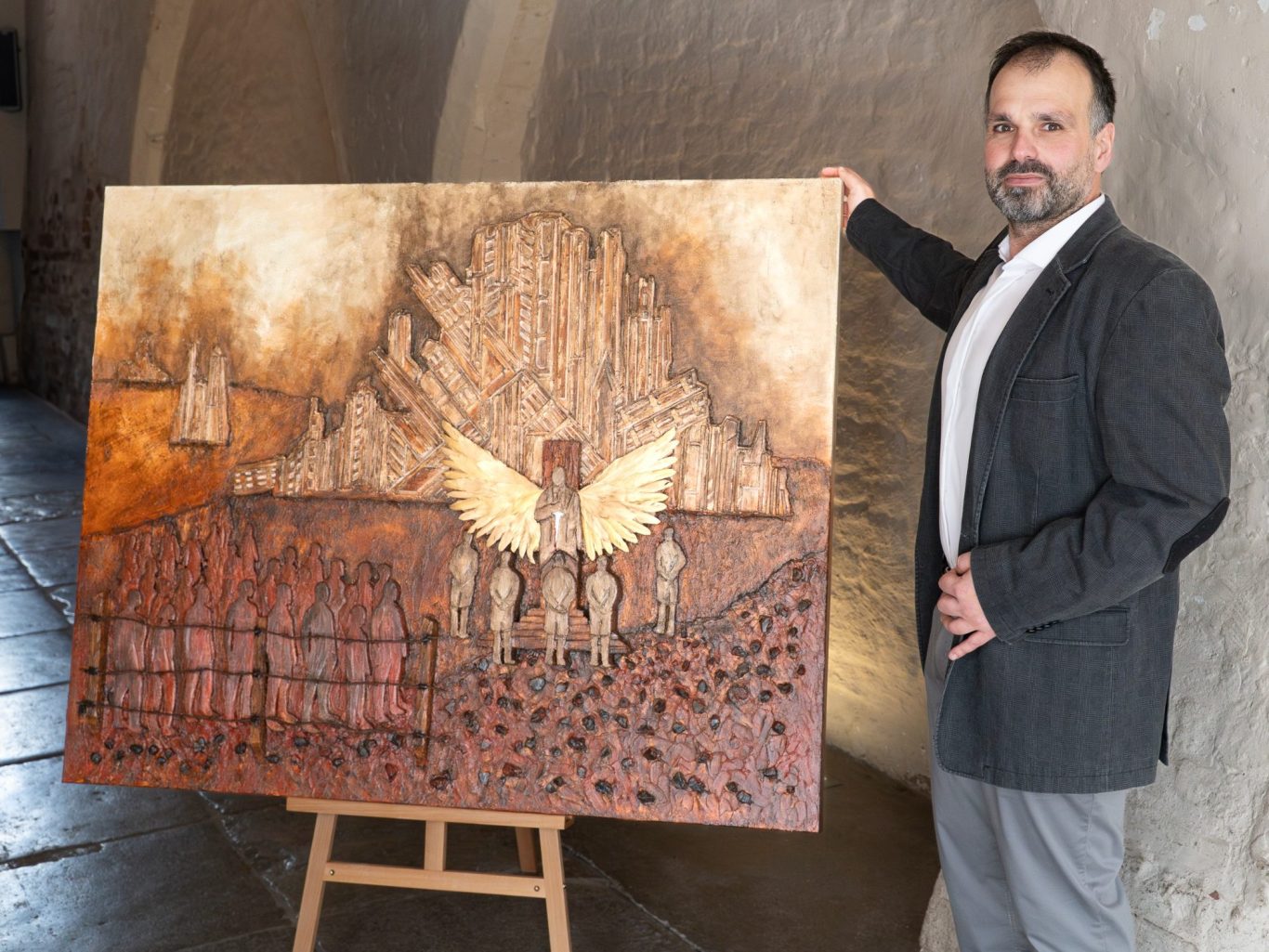
Dictatorship of the Minority
A monumental structure rises above two unequal fields of figures. At its centre, a small group stands elevated beneath pale wings, while the larger body remains below, compressed by wire, distance and broken ground. Authority is visible before its source is clear. Protection and domination become difficult to separate.
Rusting wire, charcoal, marble dust and relief give the surface the weight of something built, weathered and inherited. Dictatorship of the Minority looks at how influence hardens into structure, and how structure begins to appear inevitable once it shapes the space around us. The wings may shelter, legitimise or conceal. The image leaves unresolved whether the centre protects those below, protects itself from them, or has turned protection into the language of power.
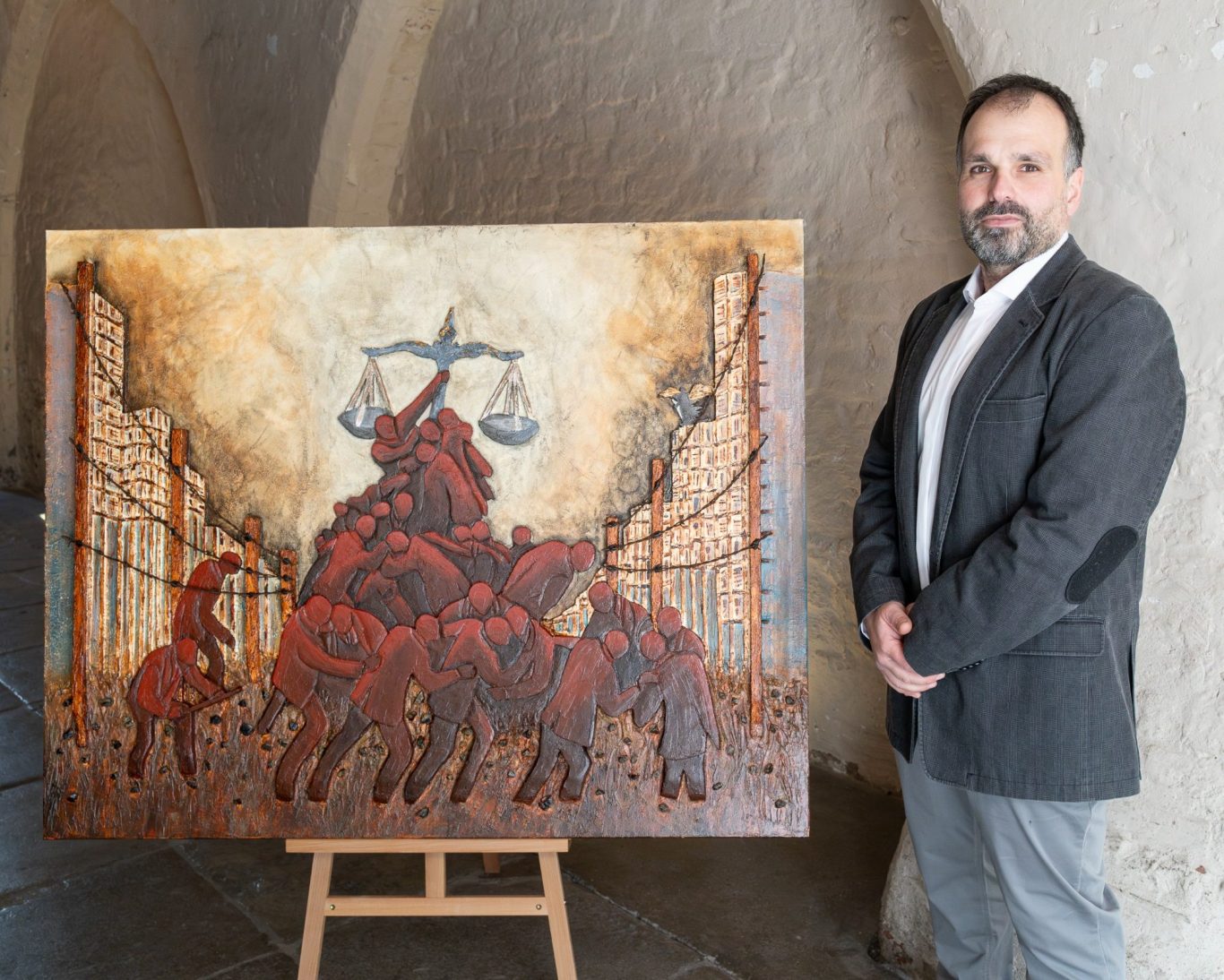
The Burden of the Majority
A crowd has become a structure. Figures brace, climb, pull and lean into one another, raising a pair of scales above the compressed mass. No one appears fully in control, yet the weight is not shared equally. Some bodies support the whole; others remain at its edges.
The relief gives this collective effort a physical strain. Wire and architecture narrow the space, while the scales promise an order that depends on the unstable formation beneath them. The title remains deliberately unresolved: the majority may be the burden, or the body made to carry it. The work places democracy not in the symbol of balance, but in the relations required to keep it aloft—relations that can hold, shift or collapse.
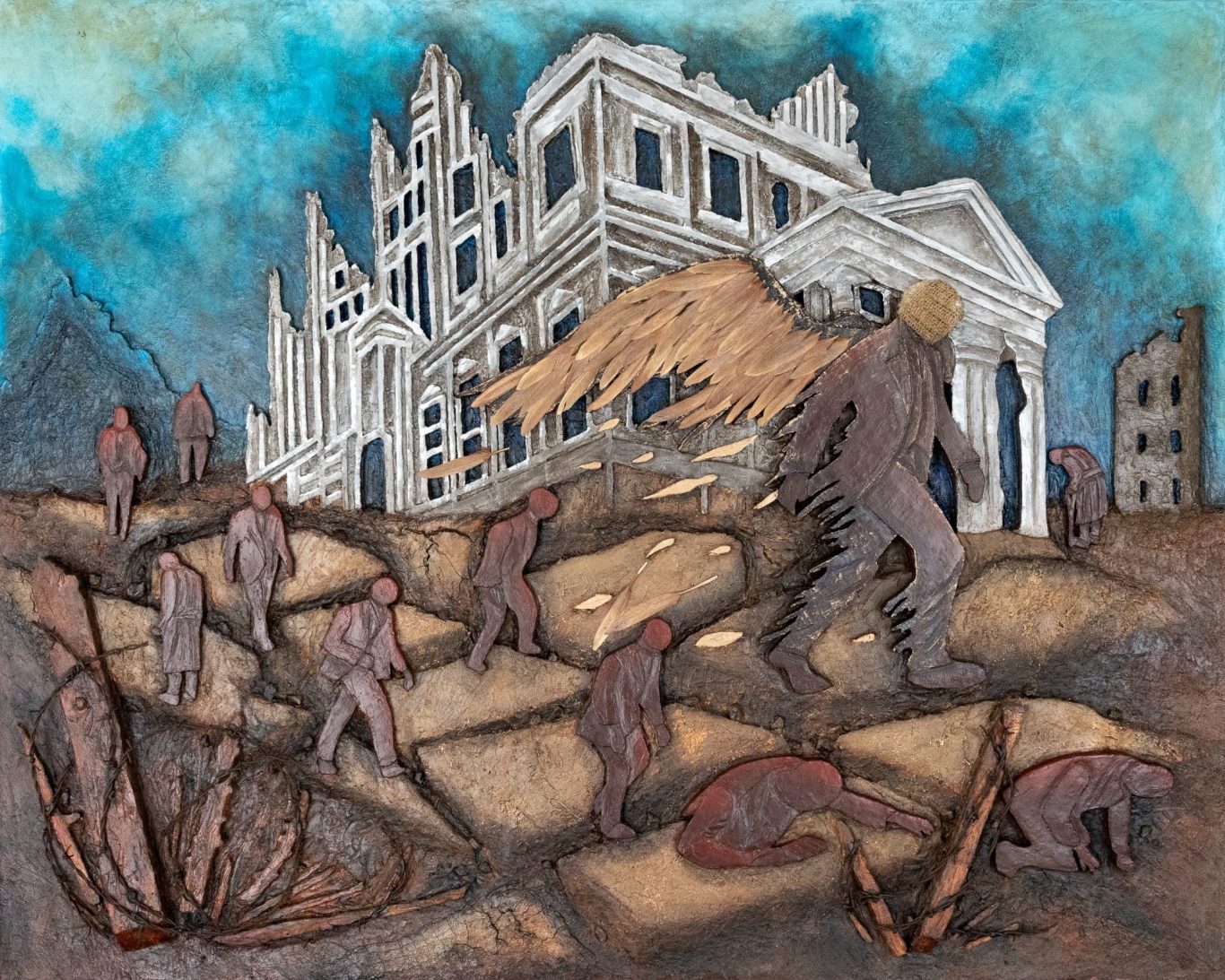
Wound of Freedom
A winged figure moves across broken ground, larger than those around it yet no less exposed. Its body is torn, its head covered, its wings already shedding feathers. Behind it, monumental buildings remain upright while smaller figures climb, crawl, hesitate or collapse across the fractured terrain.
As the third work in Fragile Balance, Wound of Freedom turns freedom from an abstract promise into a body under strain. It is neither secure possession nor heroic ascent. It appears damaged, burdened and still in motion. Feathers, jute, coal and relief keep the allegory close to matter: what seems elevated is also vulnerable to decay. The wound may mark freedom’s loss, the cost of carrying it, or the violence concealed within the structures built in its name.
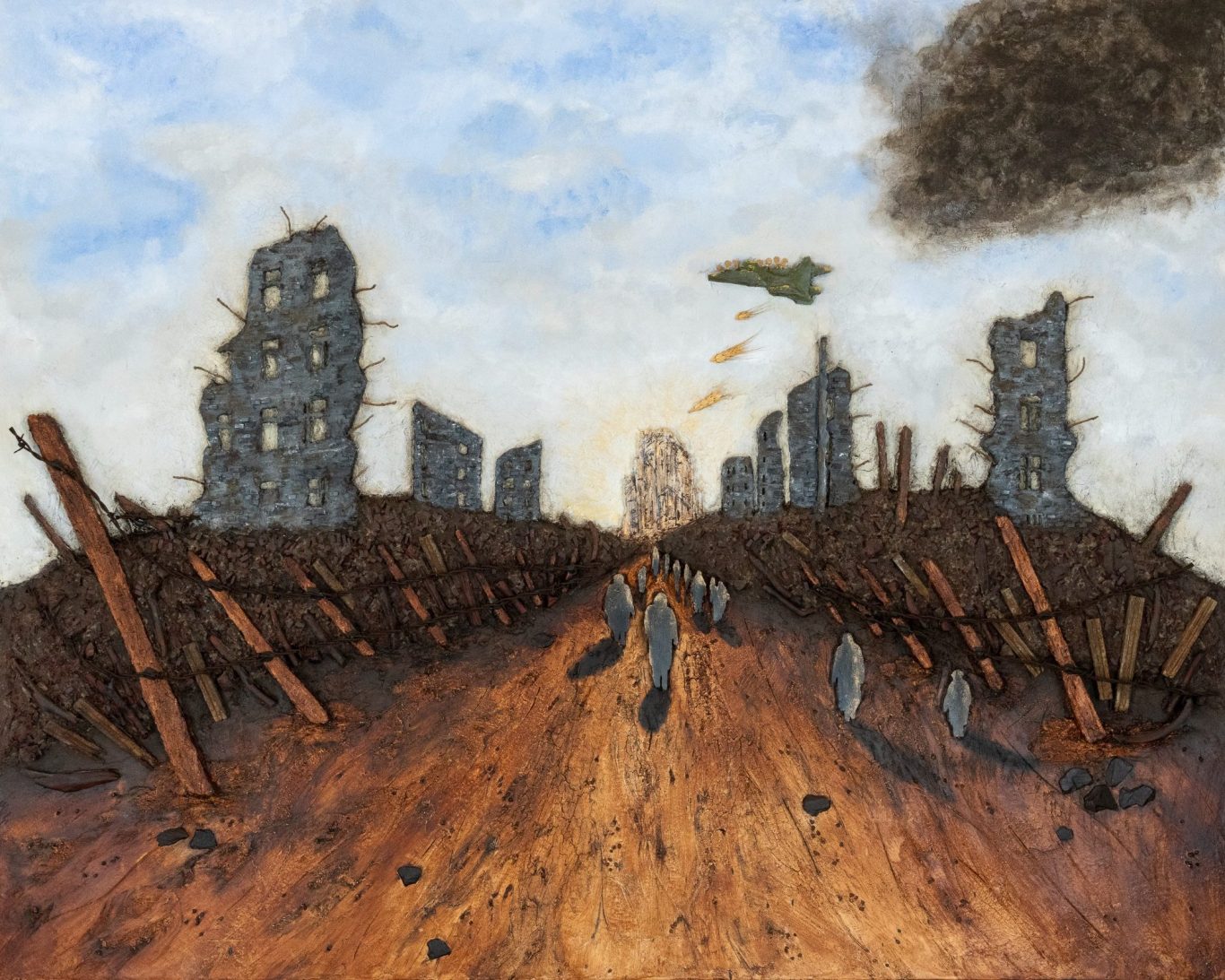
Path of Dignity
A broad road crosses a landscape of ruins, wire and abandoned structures. Scattered figures move toward a pale building in the distance, some alone, others in small groups. Their direction is shared, but their destination remains uncertain. Above them, an aircraft passes beneath a darkening sky, releasing forms that might signal aid, threat or something suspended between the two.
Path of Dignity considers what remains when the structures that once promised security no longer hold. Dignity appears here without protection or ceremony. It lies in the continued movement of bodies through damaged ground, and in the fragile possibility of orientation when certainty has disappeared. The path is open, but it offers no guarantee that what waits ahead will be refuge.
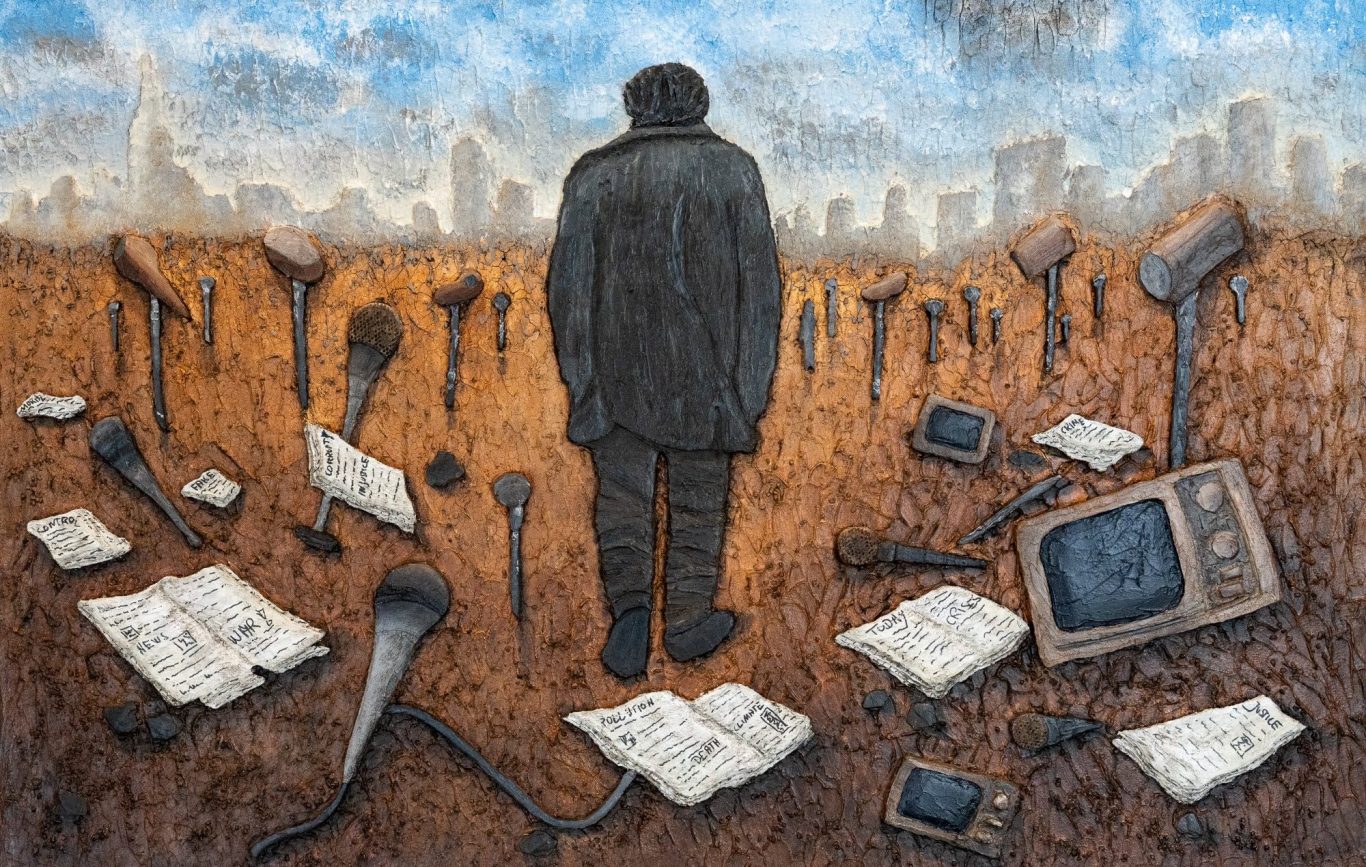
The Voice Behind the Noise
A solitary figure stands with its back to the viewer, facing a city that has almost dissolved into pale light. Around it, microphones, screens and torn newspapers lie scattered or rise from the ground like abandoned instruments. The means of communication remain everywhere, while communication itself has become uncertain.
In The Voice Behind the Noise, public speech appears as a field of competing signals, damaged carriers and interrupted attention. Marble dust, rusted wire and coarse relief give information the physical weight of debris. The figure does not speak, but its silence remains unresolved. It may suggest withdrawal, refusal or an attempt to listen beyond what demands to be heard. The work leaves open whether a voice survives by entering the noise or by creating distance from it.
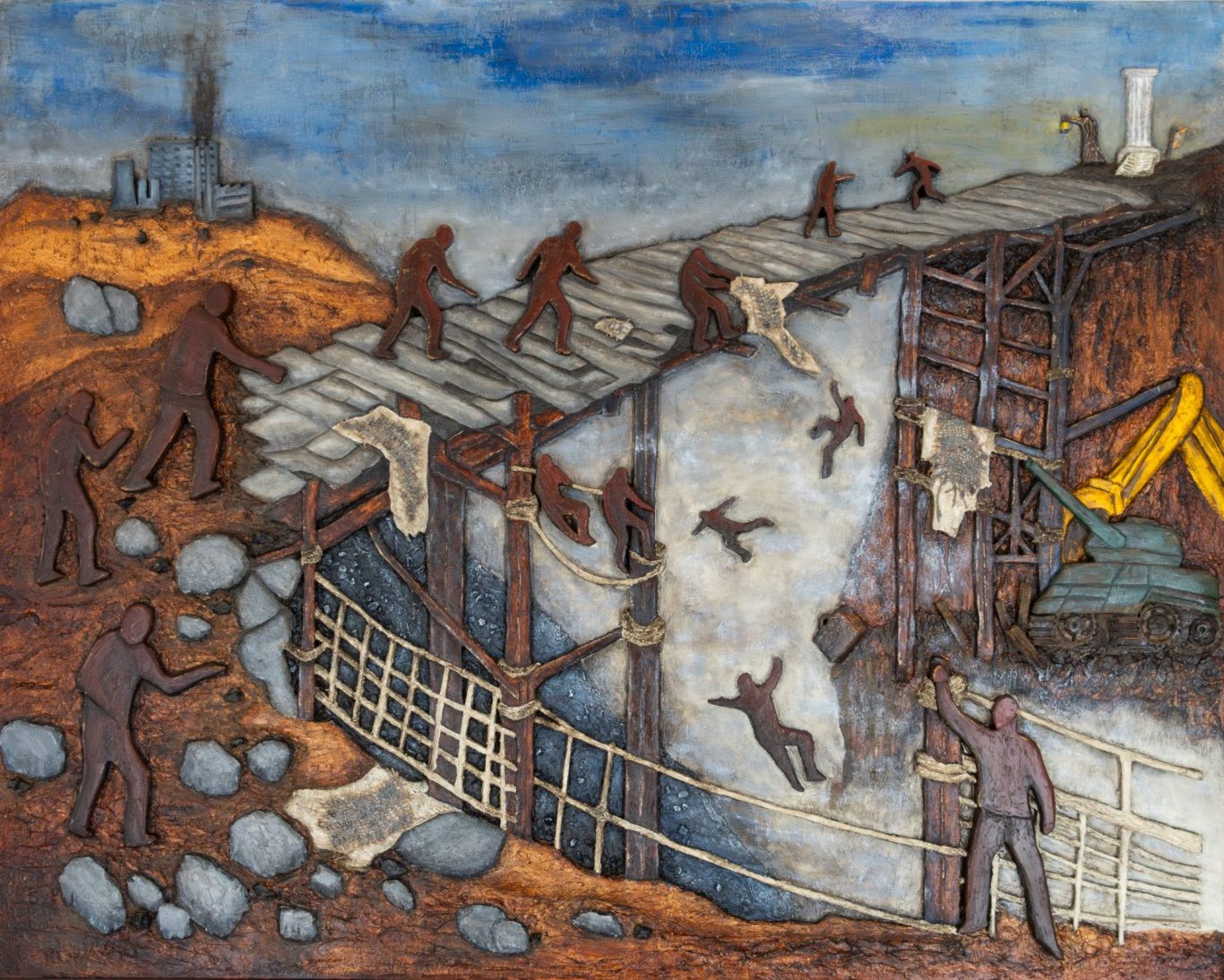
Architecture of Trust
A passage is being built across an open void. Some figures carry its sections forward, others climb its supports or hold the surrounding structure in place. Several have already lost their footing. Construction and collapse occur within the same space.
Architecture of Trust treats trust as something made between people rather than secured by the structures around them. The bridge depends on labour, balance and the willingness to place weight on what remains incomplete. Rope, timber, jute and relief preserve the fragility of that arrangement: every connection is visible, and none appears permanent. Beyond the crossing, a pale column stands at the edge of the image. Whether it marks a destination, a promise or simply another structure cannot yet be known.
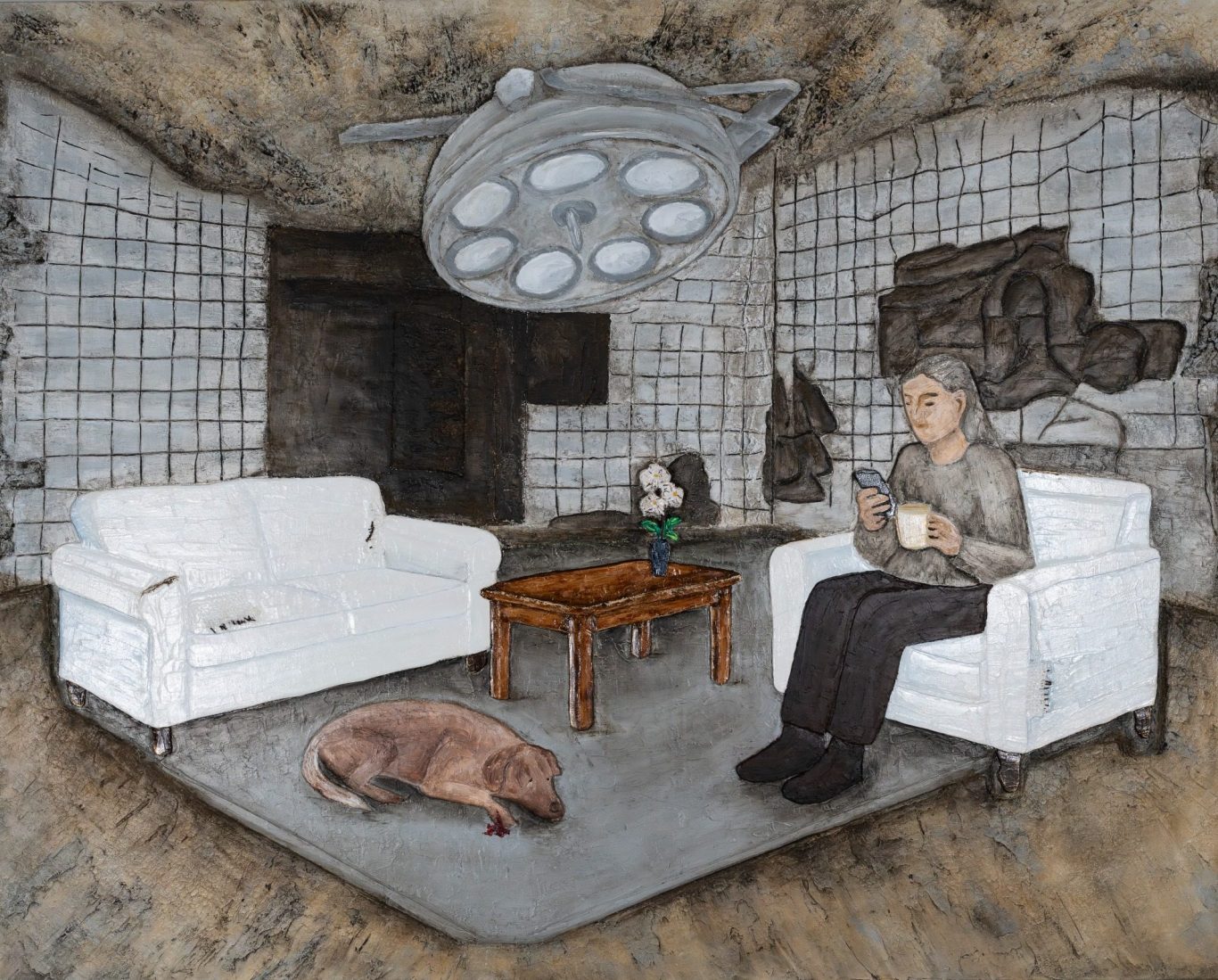
Comfort of Control
A room has been arranged for comfort, yet nothing in it feels settled. Two white seats face each other beneath a surgical lamp. One remains empty. On the other, a figure looks at a phone while holding a cup. A wounded dog lies nearby, unattended; behind them, tiled walls open around a dark recess.
Comfort of Control shifts Fragile Balance from public structures into the private interior. Control no longer appears as command, but as an environment: clean surfaces, fixed positions, familiar gestures and a device that holds attention. The room offers protection while withholding intimacy. Its order may soothe, isolate or make injury easier not to see. Whether the figure is resident, patient, witness or participant remains unresolved.
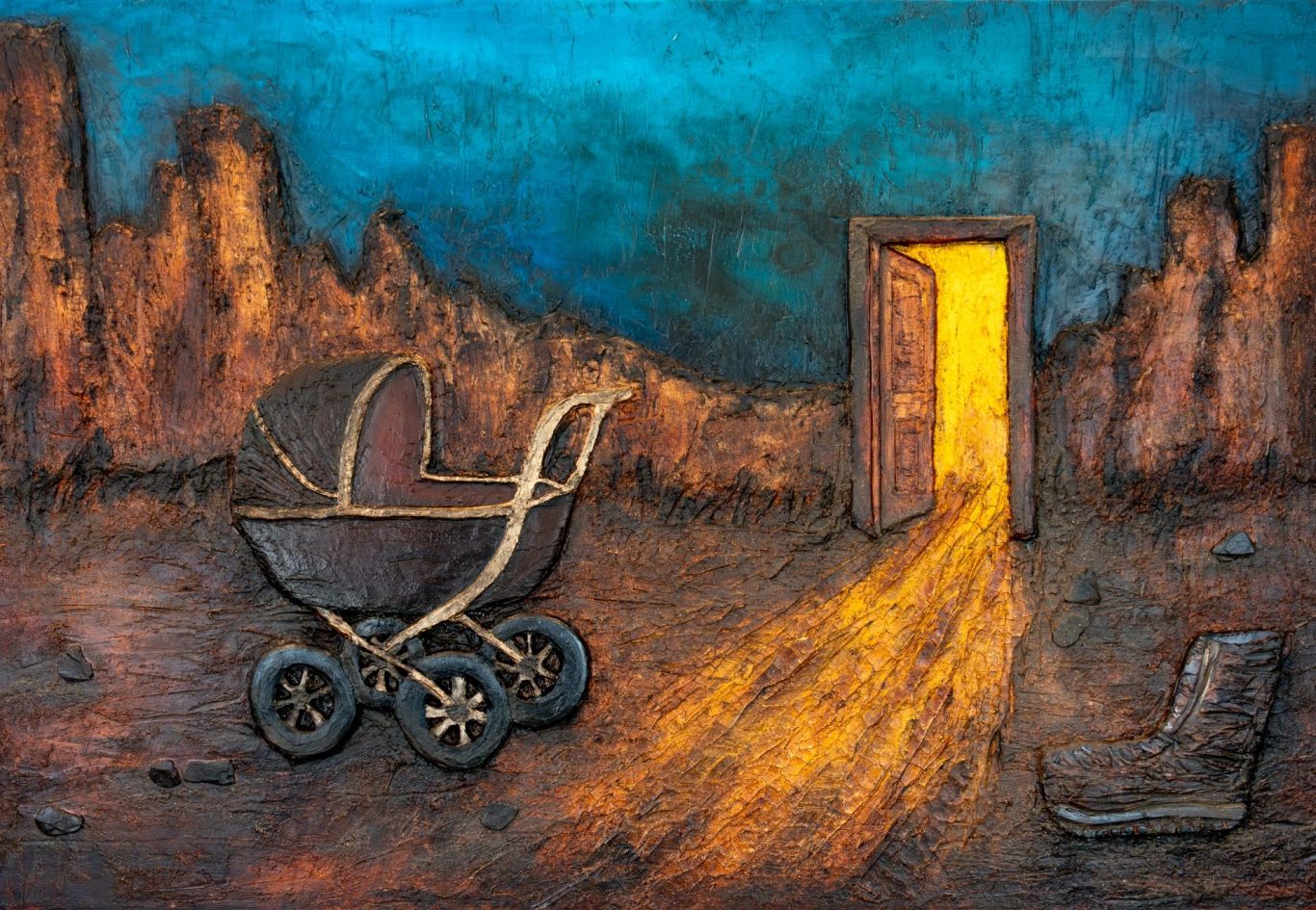
The Door Without a Name
An empty pram and a single boot remain in a landscape stripped of shelter. Between them, a door stands without walls. Warm light passes through it and spreads across the damaged ground, but nothing reveals what lies beyond.
As the final work in Fragile Balance, The Door Without a Name brings the cycle to a threshold rather than a conclusion. The abandoned objects suggest care, departure and interrupted continuity, yet never form a complete story. Marble dust, ash, stone and relief make the terrain appear both excavated and still in formation. The door offers direction without explanation. It may be an exit, a beginning, a memory or an illusion. Its openness guarantees nothing, but it preserves a possibility where the surrounding world no longer provides one.
From Fragile Balance to Photography
Fragile Balance began as an inquiry into the structures that hold collective life together, and into what becomes visible when they begin to fail. Its figures move through damaged architectures, unstable crossings and spaces in which protection, power and vulnerability can no longer be clearly separated. The works offer no resolution. They remain within that uncertainty.
This inquiry did not end with painting. It changed its method.
In photography, I no longer construct allegorical spaces. I work with what is already present: streets, barriers, signs, infrastructures, routines and the movements shaped by them. City in Return continues the attention to social order developed in Fragile Balance, but with less symbolic direction. The camera does not invent the system. It encounters its arrangements, consequences and traces.
What began in painting as an allegory of collective life becomes, in photography, an observation of the environments through which that life is organised.